Breathing through it — the breath as the only tool inside a difficult ceremony
Breath Is God — Part 8 of 10

Breathing Through It: The Breath as the Tool Inside Difficult Ceremony

Breath Is God — Series This is part eight of a ten-part series on breath, consciousness, and the sacred. Previous posts have explored breath as the divine interface, the yogic model, fear and the breath, Shiva and Shakti, the techniques, the sacred numbers, and preparation for ceremony. This post addresses the inside of the ceremony itself — specifically, what to do when it becomes difficult.

Difficult ceremony is not a failure of ceremony. It is often its fullest expression. The experiences that require the most from a person — that ask for the deepest surrender, that bring the most defended material to the surface — are frequently the ones that produce the most lasting change. But this is only true if the person can move with them rather than against them.

The breath is the only instrument you carry into ceremony that is both entirely your own and capable of changing everything. You cannot reach for music. You cannot consult a facilitator in every difficult moment. You cannot change the dose. You can only breathe. And in ceremony, that turns out to be enough.

What Difficulty Looks Like in the Body

The ceremony does not become difficult in the mind first. It becomes difficult in the breath.

The first sign that a ceremony is moving into challenging territory is almost always the breath. Before the thoughts form — before the narrative of fear or confusion or resistance — the breath has already changed. It has moved up into the chest. The belly has stopped moving. The exhale has shortened. The rate has increased. The body has received information that it interprets as threat, and it has responded accordingly, before the conscious mind has had time to notice what is happening.

This is why the instruction “just breathe” is less useful than it seems. A person in a difficult ceremony who is told to just breathe does not know what that means. They are breathing. But the breath they are taking is the shallow, fast, defensive breath of a nervous system under threat — which is precisely the breath that is making things worse.

The more precise instruction is this: notice what your breath is doing. That noticing alone — the simple act of bringing attention to the breath without immediately trying to change it — begins to shift the relationship. You are no longer inside the contracted breath, identified with the fear. You are the witness of the contracted breath. That is a different position entirely. And from that position, the next step becomes possible.
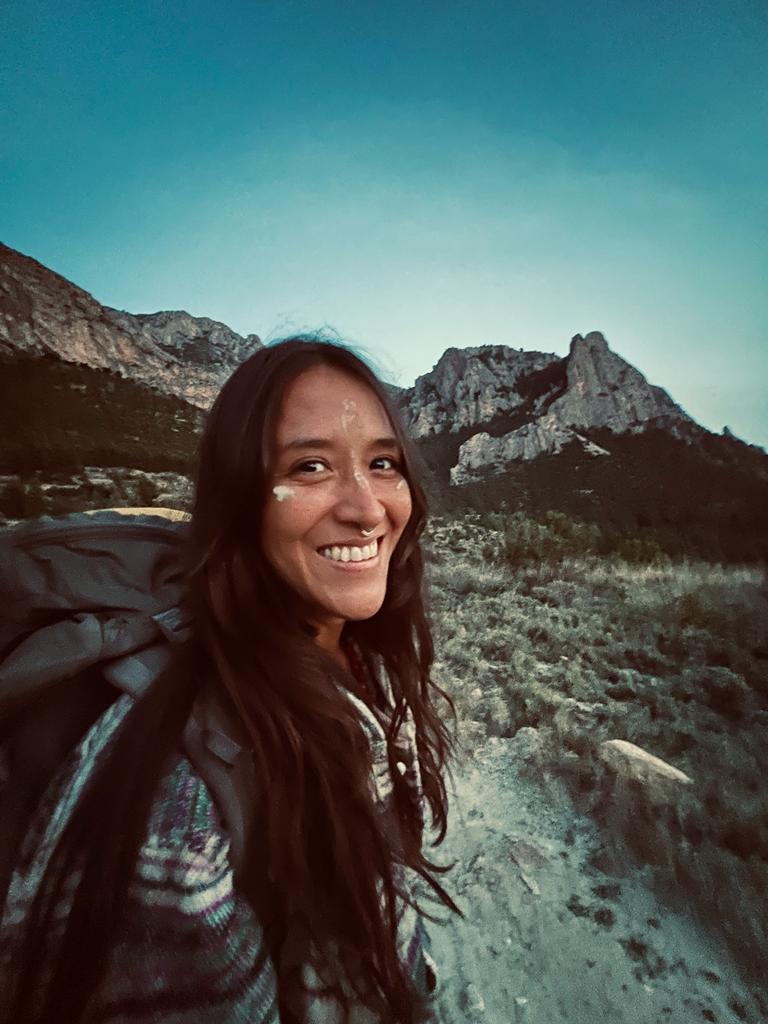
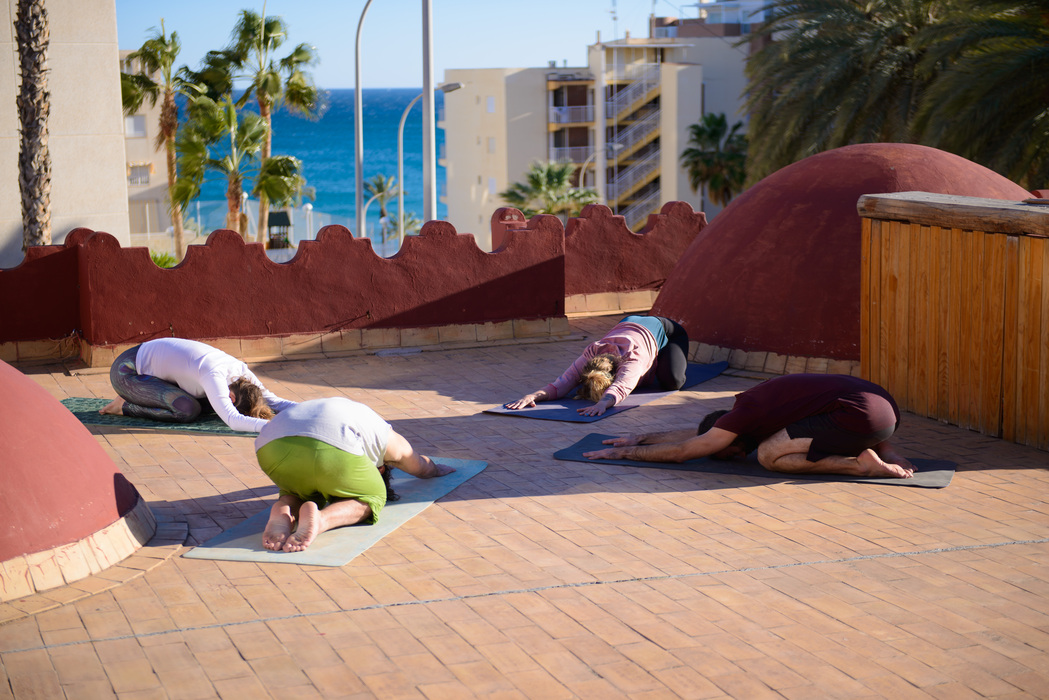
What difficulty looks like in the body — the first signs appear in the breath, before thought forms

The Single Most Useful Thing You Can Do

In many years of working with people in ceremony, through thousands of difficult moments across hundreds of ceremonies, the single most reliable intervention is this: one deliberate, slow, complete exhale. Not a sequence. Not a technique. One exhale. Slow enough to last ten or twelve seconds. Complete enough that the belly draws in at the end. Let there be a brief space of empty lungs before the next inhale begins.

This does several things simultaneously. It activates the vagus nerve, beginning the shift from sympathetic to parasympathetic dominance. It reduces CO2 from any previous breath-holding. It requires attention — sustained, specific attention on a single physical event — which temporarily displaces the narrative of fear from the foreground of awareness. And it establishes, for the body, the most basic of all physiological signals: you are safe enough to fully exhale.

An animal that is truly in danger does not exhale fully. Full exhalation is the body’s vote that it is safe. Cast that vote deliberately.

After the one exhale, take a natural inhale. Then another full, slow exhale. And another. Within three to five cycles, the nervous system is measurably different from where it was. The chest has begun to soften. The belly has remembered to move. The rate has slowed. And the mind, receiving different signals from the body, begins to recalibrate. What seemed like an emergency has not disappeared. But it is now survivable. And surviving it, moving with it rather than against it, is where the ceremony does its deepest work.

The single most useful thing — one full, slow, deliberate exhale before anything else

When the Body Wants to Fight or Run

The hardest moments in ceremony are not the moments of confusion or grief, difficult as those are. They are the moments when the body’s survival instinct fires fully and the person feels the overwhelming urge to stop, to leave, to make it end. The involuntary activation of fight or flight is felt as emergency. The body is doing its ancient job of protecting the person from perceived annihilation. The problem is that what ceremony asks for — dissolution of the defended self, surrender into the unknown — is, to the nervous system’s threat-detection system, indistinguishable from death.

There is nothing wrong with the person in this moment. There is nothing wrong with the ceremony. The medicine is doing exactly what it is designed to do. What it needs is not to be stopped but to be met. And the meeting point is the breath.

When the survival instinct fires, the breath becomes the bridge between two states: the contracted state that the body is trying to maintain and the open state that the ceremony is trying to reveal. The path from one to the other is not a leap. It is a series of exhales. Each one a small act of trust. Each one a vote against the defended position. Each one carrying the person, one breath at a time, from the place of contracted fear to the place where the thing that was feared turns out to be the thing that was longed for.

You cannot think your way out of the tightest moment in ceremony. You can only breathe your way through it.

This is not spiritual advice. It is physiological instruction. The survival instinct is a body state. It can only be changed from within the body. The breath is the only voluntary instrument the body has that reaches directly into the autonomic nervous system. Everything else — thoughts, beliefs, intentions, resolutions — is downstream. Change the breath first. Everything else follows.

When the body wants to fight or run — the breath as the bridge between contracted fear and open receiving

Sounds, Sighs, and Surrender

In many indigenous ceremony traditions, vocalization during ceremony is not incidental. It is instructed. The sigh, the moan, the tonal hum — all of these are extended exhalations that add the element of vibration to the vagal activation of the long exhale. The Bhramari technique described earlier in this series is a formalization of something that the body, given permission, does naturally when it is moving through something difficult.

In a difficult ceremony, giving the exhale a sound often changes what is possible. The sound does not need to be a particular tone or held to a particular duration. It simply needs to be the breath finding its voice — not the voice of the controlled, presentable self, but the voice of the body releasing what it has been holding. This is sometimes undignified. It does not matter. Dignity is the ego’s concern. Ceremony is not.

The sigh is not a symptom of difficulty. It is the sound of difficulty becoming something else.

What follows a genuine, unguarded sigh in ceremony is often surprising. The thing that seemed too large to move shifts. The grief that seemed fixed begins to flow. The fear that seemed solid reveals itself as something more liquid, more passable. The body knew all along how to do this. The sigh is just the permission it needed.

Facilitators at La Mezquita are trained to recognise and encourage this. Not by instruction — which would interfere — but by presence. By their own breath. By the quality of attention they bring to the room. The breath of the facilitator in ceremony is not irrelevant. It is part of the container. When the facilitator breathes slowly and completely, the participants feel it. The body is a resonant system. It responds to what is around it.

Sounds, sighs, and surrender — the exhale finding its voice in the midst of difficult ceremony

After the Difficult Part

What comes after the difficult part of ceremony — after the tightening has passed, after the exhale has done its work, after the thing that seemed impossible has, somehow, been possible — is one of the most characteristic experiences of well-held ceremony: a quality of spaciousness that was not available before. The opening that the difficulty was guarding. The revelation that the defended position was keeping at arm’s length.

This is not a reward for endurance. The difficulty and the opening are the same movement. The contraction of fear and the expansion of release are one process, not two. The tightening gathers the energy. The breath releases it. What felt like an obstacle was the doorway. Every time.

Understanding this before ceremony matters. Not because it makes the difficult moments easier in the moment — it does not — but because it changes the relationship to difficulty when it arrives. Instead of interpreting the tightening as a sign that something is going wrong, the person can recognise it as the sign that something is about to go right. The breath can then do its work with a different quality of intention behind it. Not escaping. Moving toward.

The breath does not protect you from the depth of ceremony. It carries you into it and brings you through.

This is what the long practice of breathwork prepares you for. Not the avoidance of difficult experience, but the capacity to be in it fully, without fragmenting. To stay with the exhale when every instinct says to hold on. To trust, one slow breath at a time, that the body knows a way through that the mind cannot see from inside its fear.

After the difficult part — what the breath reveals when the contraction finally releases

The Ceremony That Could Not Be Escaped

Every person who has sat in a genuinely difficult ceremony and come through it describes the same thing in different words: at the point when they stopped trying to escape and simply breathed, something changed. Not the situation. Not the medicine. Not the room. Something in their relationship to what was happening. The resistance that had been generating the difficulty dissolved when it was no longer being met with resistance. The fire that had seemed to be consuming them turned out to be the fire that was forging them.

The Sufi tradition speaks of the polishing of the mirror — the removal, through difficulty and surrender, of the accumulated dust that prevents the heart from reflecting the divine light that is always already shining on it. The difficulty is not the polishing. The breath is the polishing. The difficulty is only the reason the polishing is needed. Without the tightening, there would be nothing for the exhale to release.

One exhale at a time. That is all that is ever asked. Not courage on an epic scale. Not spiritual achievement. Just the next exhale, slow and complete, and the willingness to see what opens when the breath has done its quiet, undramatic, sacred work.

You do not need to be brave. You only need to be willing to exhale.

Babaji is the founder of La Mezquita. Read more about the team.
Next in this series: The Return — what happens after ceremony closes, how the breath changes in integration, and why the practice that was preparation becomes the most important practice of all in the weeks that follow.

Come and breathe with us

Breathwork is woven into every retreat at La Mezquita. If this resonates, the next step is finding the right retreat for you.

← Back to the blog