Breathwork before ceremony — the preparation that changes everything
Breath Is God — Part 7 of 10

Breathwork Before Ceremony: The Preparation That Changes Everything

Breath Is God — Series This is part seven of a ten-part series on breath, consciousness, and the sacred. Previous posts have covered breath as the interface with the divine, the yogic model of slow breathing, fear and the breath, Shiva and Shakti, the specific techniques, and the sacred numbers. This post is the most practical in the series: what to actually do in the days and hours before ceremony, and why the preparation is not separate from the ceremony — it is the ceremony, beginning early.

Most people think of ceremony preparation as logistics. Dietary restrictions. Medication adjustments. Travel arrangements. Arriving on time. These things matter. But the most important preparation is invisible to logistics. It happens in the nervous system. In the quality of attention. In the breath.

A person who arrives at ceremony already familiar with stillness — who has sat with their own breath for twenty minutes each morning for the week before, who knows what it feels like to let the exhale be twice the inhale, who has encountered some of the fear that always precedes opening — is not the same person as one who arrives having done none of this. They are in a different physiological state. They have a different relationship with the unknown. They will have a different ceremony.

The Week Before: Building the Container

You do not begin to prepare when you arrive. You begin when you decide to come.

The tradition of dieta — dietary and behavioural restrictions in the period preceding ceremony — is widely misunderstood as superstition or health precaution. There is a health dimension to it, particularly regarding MAOIs and tyramine, but the deeper purpose is different. Dieta is about reducing external stimulation and turning attention inward. It is the beginning of the internal reorientation that ceremony requires.

The same logic applies to breathwork in the pre-ceremony period. Beginning a daily morning practice five to seven days before ceremony serves two functions. The first is technical: it builds familiarity with the techniques so that they are available as instinct rather than procedure during ceremony. The second is more fundamental: it begins the process of inward turning. Daily breathwork is daily ceremony. It is the practice of meeting what arises in the body when external distraction is removed. The nervousness that surfaces in the breath practice in the days before ceremony is the same nervousness that will arise in ceremony. The practice gives you a first encounter in a lower-stakes environment.

The practice we recommend for the pre-ceremony week is simple: twenty to thirty minutes each morning. Begin with five to ten minutes of natural breath observation, without altering anything — simply noticing what is already happening. Then ten minutes of Nadi Shodhana with a 1:0:2 ratio. Then five minutes of Bhramari. End in silence. That is the whole practice. It is not complex. It is not exciting. That is the point.
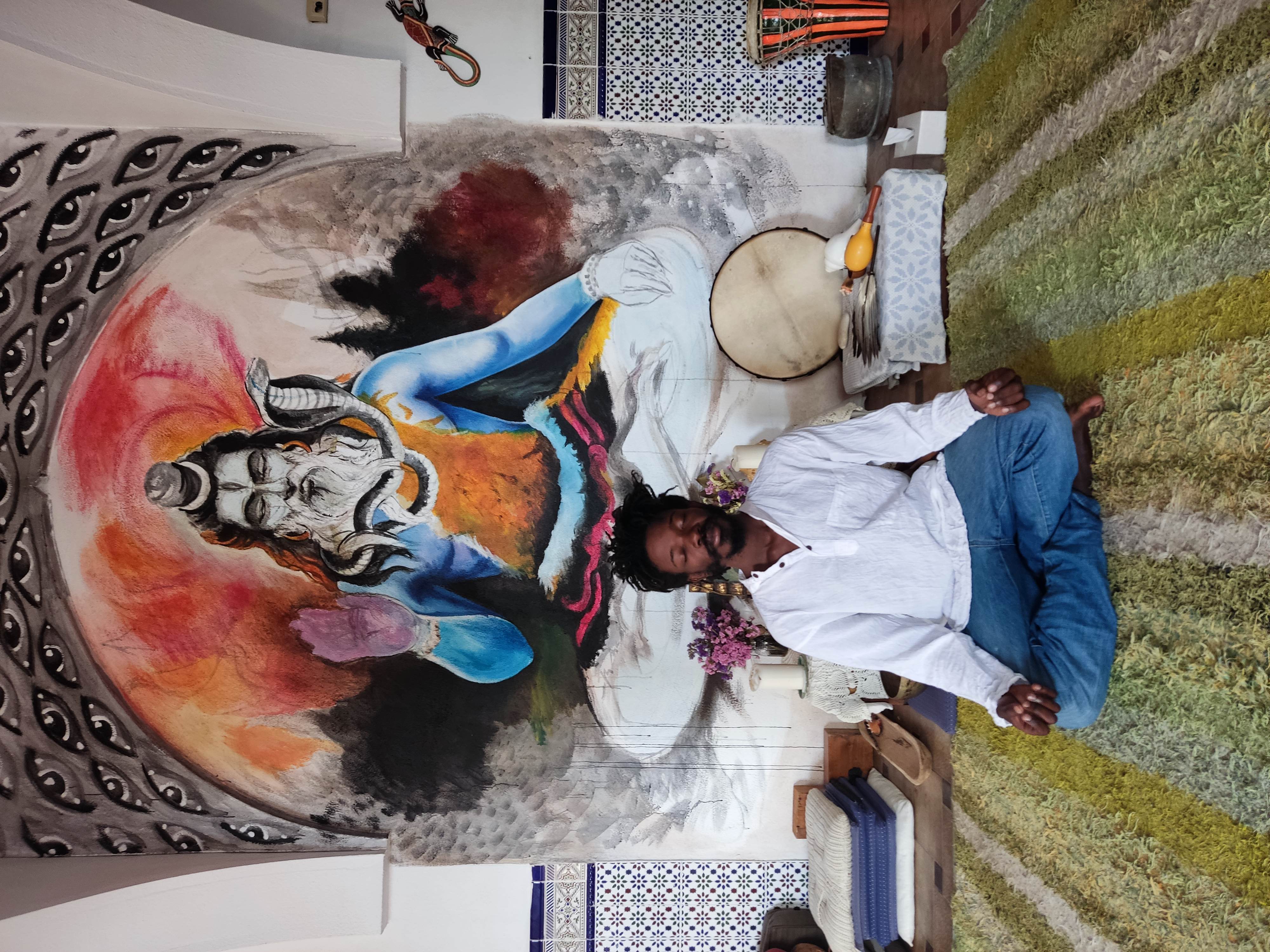
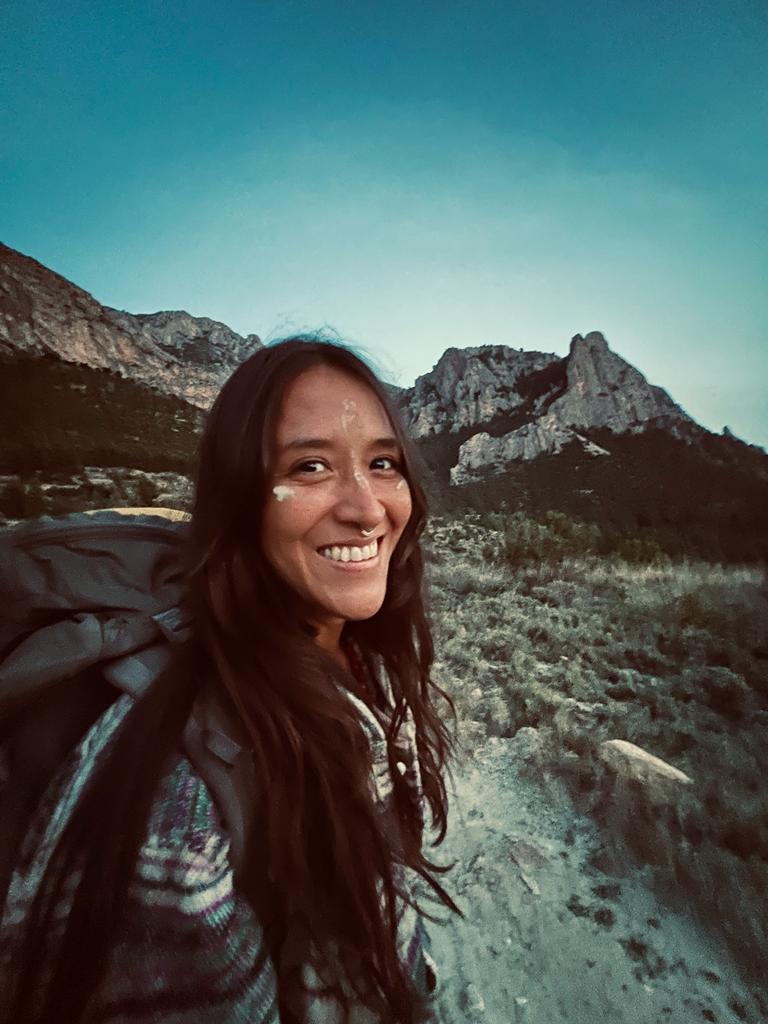
The week before ceremony — daily breathwork building the container for what is coming

The Night Before: Entering the Threshold

The evening before ceremony is a threshold. The ordinary world is still present — phones, meals, conversation, the habitual texture of daily life — but something has already begun. The person walking into ceremony tomorrow is not quite the same as the person who would have walked into an ordinary day. Most people can feel this. It often manifests as unusual restlessness, or its opposite: an unexpected stillness. Sometimes as anxiety. Sometimes as strange, vivid dreams if sleep comes easily.

The evening practice should honour this transition. We suggest sixty to ninety minutes of unhurried breathwork, beginning after the last meal has settled. Not a performance of technique, but a genuine sitting with whatever is present. If there is anxiety, breathe with the anxiety. Do not try to resolve it. Let the breath be wide enough to contain it without being consumed by it. The extended exhale will do the physiological work; you only need to let it happen.

The night before ceremony is not the time for one more technique. It is the time to stop doing and begin being.

Many people find it useful to write in the evening before ceremony: not analysis, but simple witnessing. What am I carrying into tomorrow? What do I hope for? What am I afraid of? Writing is not ceremony, but it is a form of the same attention that ceremony requires. The act of making the interior visible on the page is a first surrender of the defended position. The breath practice that follows the writing goes deeper than it would have without it.

Sleep, when it comes, is itself a preparation. The nervous system consolidates in sleep. The insights and emotional shifts of the breathwork settle into the body. What seemed difficult at eleven o’clock is often quieter at seven the next morning. Trust the night before. It is doing its work.

The night before ceremony — entering the threshold, breathing with what is present

The Morning of Ceremony

The morning of ceremony, ideally, begins in silence. Not forced silence — not the effortful avoidance of speech — but the natural quiet of someone who does not need to fill the space with noise because they are already in relationship with what is coming.

A short practice, thirty to forty minutes, is sufficient and preferable to a long one. The purpose now is not to shift the nervous system from one state to another. The shifting has already been happening for a week. The purpose is to arrive at ceremony having already touched the breath today. To have visited the interior this morning. To have reminded the body of what it knows.

The morning sequence: five minutes of natural observation. Ten minutes of Kapalabhati at a gentle pace — not the vigorous clearing of a full session, but enough to circulate energy and establish aliveness. Then fifteen to twenty minutes of Nadi Shodhana with brief retention. Then five minutes of simply lying still. The last five minutes of silence before ceremony begins are at least as valuable as any of the active practice that preceded them.

The most important breath of the ceremony is the one you take the moment before the medicine is given. Let it be a long one.

At La Mezquita, we build a formal breathwork session into the ceremony day itself, conducted by the facilitators, before the medicine is taken. This is not because individual practice is insufficient. It is because breath practiced in community has a different quality than breath practiced alone. The field generated by a group of people breathing together with intention is palpable, and it changes what is available for each person individually. The resonance is literal — hearts synchronising through shared breath rhythm — and it is also something harder to describe: the sense that you are not undertaking this journey alone.

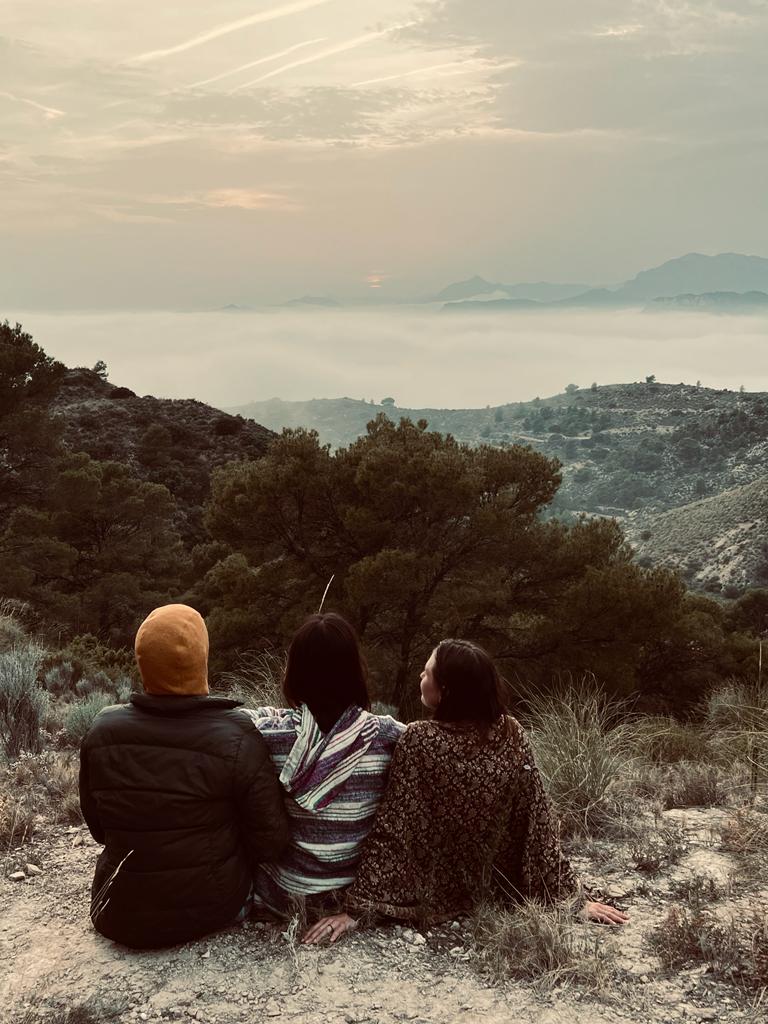
The morning of ceremony — group breathwork and the shared field that preparation creates

What Preparation Actually Changes

People who have attended ceremony with and without substantial breathwork preparation report a consistent difference, and it is not what most would predict. The expectation is that preparation makes ceremony easier. In some respects it does. But the more accurate description is that preparation makes ceremony more available.

The person who arrives unprepared has, in effect, brought the defended self entirely intact to the threshold. Every layer of habitual protection — the distraction, the intellectualising, the performance of competence, the deep-seated resistance to being seen — is fully operational. The medicine has to work against all of that. It can, and does, but the process is often longer, more turbulent, and produces less integration because the ego, not finding another way through, tends toward overwhelm rather than opening.

The person who has been breathing daily for a week has, at least partially, begun to acquaint the ego with the process of releasing control. Not by overcoming it — that is never the right approach — but by demonstrating, through daily practice, that surrender is survivable. That the breath can carry what the mind cannot hold. That the moment after the longest exhale is not empty but full.

Preparation does not protect you from the depth of ceremony. It makes you available for it.

In practical terms: people with preparation tend to move through the opening more quickly. They tend to remember more. They tend to have more capacity for working with difficult material rather than simply enduring it. They tend to integrate more readily in the days that follow, because they already have a practice — the daily breath practice — into which integration can be brought.

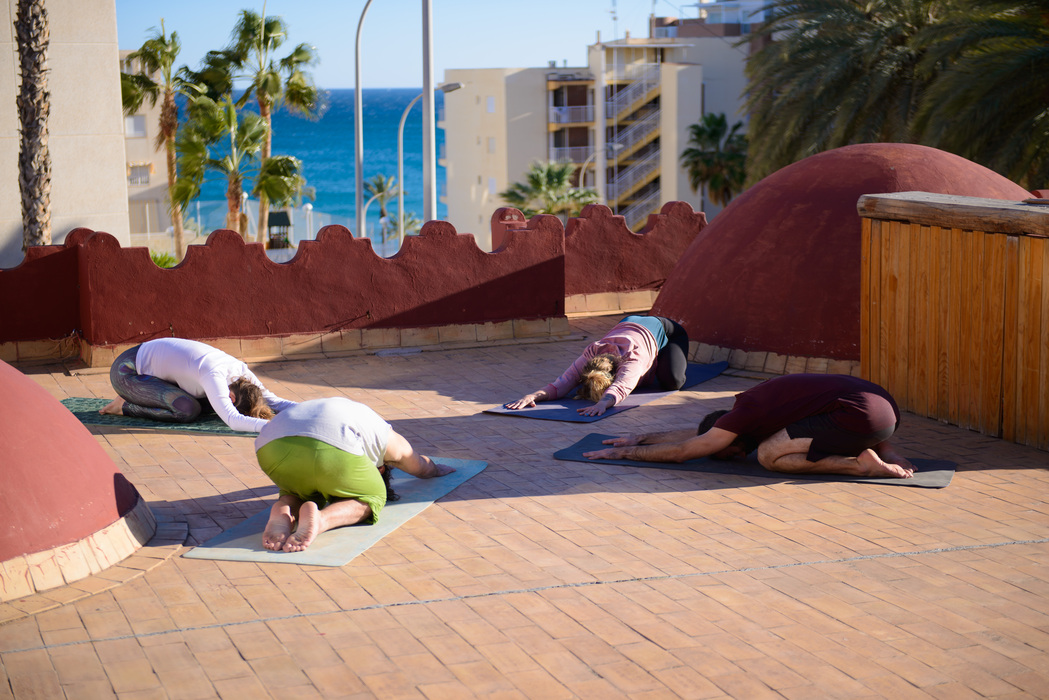
What preparation actually changes — the difference breathwork makes to ceremony availability

A Simple Practice for the Days Before

If you are reading this and you have a ceremony coming up, here is the practice distilled to its simplest form. You do not need to have read the previous six posts in this series. You do not need to understand the mechanics. You need only to do this, every morning, for the days before you arrive.

Sit comfortably, or lie down. Close your eyes. For the first three minutes, simply observe your breath without changing anything. Notice where it is in your body. Notice its pace. Notice whether it is tight or free, shallow or deep. Do not judge it. Just see it.

Then begin to extend the exhale. Not dramatically. Just let it be a little longer than the inhale. If the inhale is four counts, let the exhale be six or eight. Do this for ten minutes. Not tightly — if you lose count, start again. The counting is not the point. The point is the long exhale.

Then, for the last five minutes, let go of the counting entirely. Simply breathe in whatever way feels natural after the previous ten minutes. Often this will be slower and fuller than your ordinary resting breath. This is the breath practice returning you to what was always possible. Sit with it.

Twenty minutes. Every morning. That is the entire preparation. Simple enough to actually do.

When you arrive at ceremony, you will not be the same person you were a week ago. Your nervous system will have been in contact with its own depth, daily, for seven days. The breath will be familiar. The stillness will be less strange. And the door, when it opens, will find you closer to the threshold than you would otherwise have been.

The simple practice — what to actually do in the days before ceremony arrives

Ceremony Begins Before It Begins

The boundary between preparation and ceremony is more porous than it appears. The moment you decided to come was the beginning of the ceremony. The first time you sat with your breath in the week before was ceremony. The writing you did the night before was ceremony. The long exhale in the morning darkness was ceremony. By the time you sit in the circle and the medicine is offered, you have already been in ceremony for days.

This is not a metaphor. The nervous system does not distinguish sharply between the small openings of daily practice and the larger opening of the ceremony itself. They are on the same continuum. Every time you chose to breathe slowly when the anxiety rose, you were practising for the moment in ceremony when the anxiety will be louder. Every time you stayed with the long exhale when the mind wanted to hurry, you were building the capacity that ceremony will draw upon.

Prepare well. Not because the ceremony is dangerous without preparation — it is not — but because depth is wasted when the vessel is not ready for it. The medicine will meet you wherever you are. It will go as far as the container allows. The container is built by the breath, one long exhale at a time, in the quiet mornings before the ceremony that changes you.

The ceremony finds what the preparation has already begun to loosen. The breath is how you loosen it.

Babaji is the founder of La Mezquita. Read more about the team.
Next in this series: Breathing Through It — what to do when the ceremony becomes difficult, when the breath shortens and the body tightens and the mind reaches for an exit that does not exist. The breath is not a cure for difficulty. It is how you move through it.

Come and breathe with us

Breathwork is woven into every retreat at La Mezquita. If this resonates, the next step is finding the right retreat for you.

← Back to the blog