Pranayama practice — Shiva, Shakti and the sacred union in every breath
Breath Is God — Part 4 of 10

Shiva, Shakti & The Breath: The Sacred Union at the Heart of Pranayama

Breath Is God — Series This is part four of a ten-part series exploring the relationship between breath, consciousness, and the sacred. Part one established the central thesis: air is the interface between the human and the divine. Part two explored how slow breathing extends perception and why the yogic tradition treated lifespan as a function of breath rate. Part three examined what fear does to the breath and why the breath is the only instrument that can restore the connection to source. This post goes deeper into the map: the two currents that move through the body, the polarity they represent, and what it means when they finally meet.

There is a saying in Tantra so ancient that no one can trace its single author: Shiva without Shakti is a shava. A shava is a corpse. Pure consciousness, without the energy that moves through it, is inert. And the energy, without consciousness to hold it, is blind force — creation with no direction, fire with no hearth.

The breath is where these two meet. In every single cycle of inhalation and exhalation — in the rising and the falling, the opening and the surrender — Shiva and Shakti enact their ancient union in your body. Not as metaphor. As physiology.

Understanding this changes what pranayama is. It is no longer breathing exercise. It is ritual. It is the conscious participation in a cosmological event that is already happening, whether you attend to it or not.

Two Currents in One Body

You are already breathing with two rivers. The question is whether you know it.

The yogic anatomy of the breath is built on the concept of the nadis — the subtle channels through which prana moves. The classical texts describe seventy-two thousand nadis in total, but three are primary. Sushumna runs along the central axis of the spine. On its left winds Ida, the lunar channel, cooling, inward, feminine in quality, associated with the left nostril. On its right winds Pingala, the solar channel, heating, outward, masculine in quality, associated with the right nostril.

This is not merely symbolic. Modern sleep research has confirmed what the yogis described without instruments: the nostrils alternate in their dominance every ninety minutes to two hours, a cycle now called the ultradian rhythm of nasal airflow. Right now, one nostril is more open than the other. In an hour and a half, the balance will have shifted. The body is always in conversation with itself — solar, lunar, solar, lunar — oscillating between the two poles in a rhythm as reliable as the tides.

When the right nostril dominates, the sympathetic nervous system is slightly more active. Body temperature rises fractionally. Cognitive processing tends toward linear and analytical. When the left nostril dominates, the parasympathetic system comes forward. The body cools slightly. Attention becomes more diffuse, associative, spatial. The left hemisphere and the right alternate in a rhythm that tracks the breath with surprising fidelity.

Ida and Pingala are not mythology. They are a description of something the body is doing right now, in you, whether you believe in them or not.
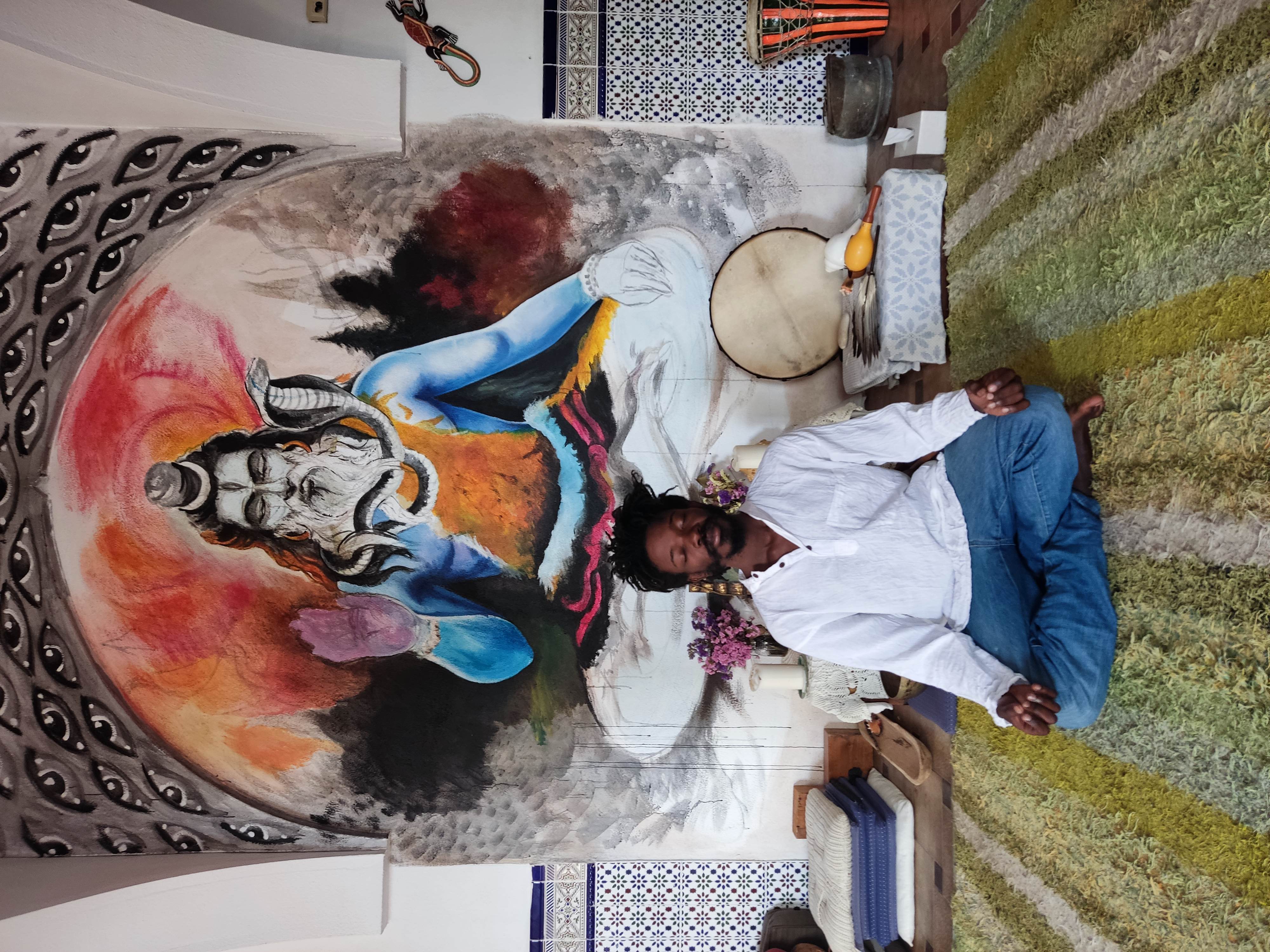
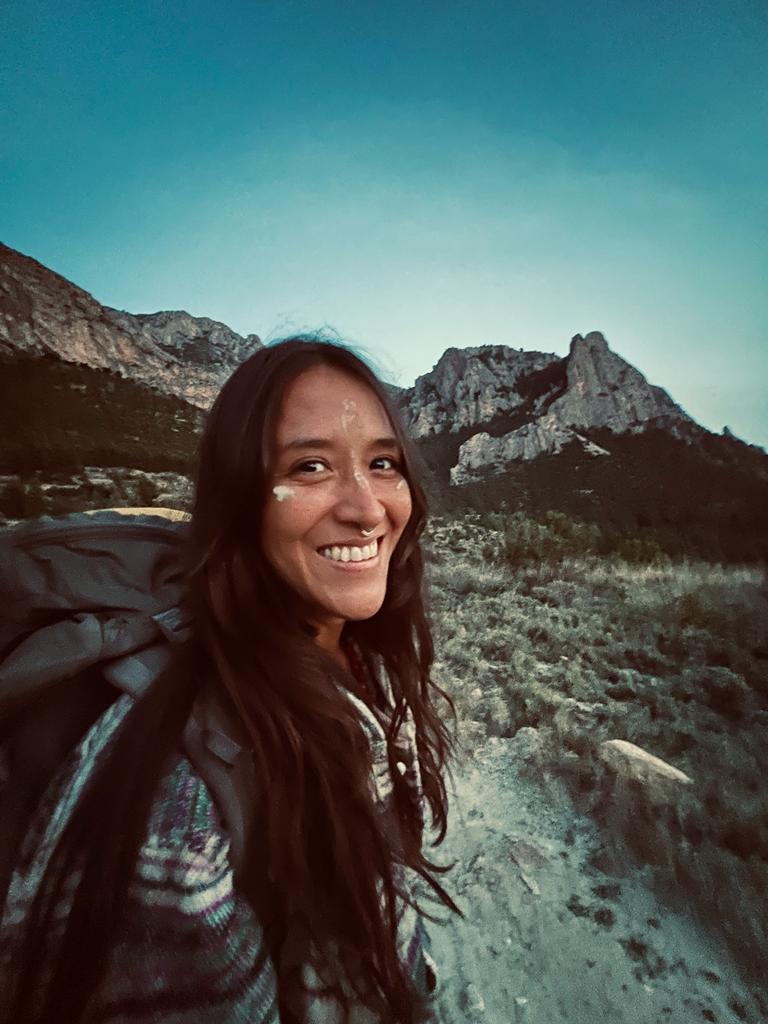
Meditation and the two nadis — Ida and Pingala, the lunar and solar currents of the breath

The Witness and the Movement

Shiva, in the non-dual Tantric tradition — particularly in Kashmir Shaivism, the most sophisticated metaphysical system the Indian subcontinent produced — is not a deity sitting on a mountain. Shiva is the ground of consciousness itself. The pure, unmoving awareness in which all experience arises. The witness that neither clings nor retreats. The still point at the centre of the turning world.

He is represented in iconography lying on his back, eyes half-closed in the deep stillness of samadhi. Not dead. Not absent. Perfectly, utterly present — but so still that without Shakti, nothing moves. He is consciousness without content. Awareness that is not yet aware of anything.

Shakti is everything that moves within that stillness. The first vibration of creation — what the tantrics called spanda, the sacred trembling — is Shakti beginning to dance. Light, sound, form, sensation, the pull of desire, the push of aversion, the breath entering and leaving the body: all of this is Shakti. She is not separate from Shiva. She is his own energy, his own creative capacity, his own longing to know itself through the experience of form.

Shiva is the sky. Shakti is the weather. Both are necessary. Neither alone is the whole.

Prana — the life force that rides the breath — is Shakti in the body. When you inhale, you are drawing Shakti in. When you exhale slowly and completely, you are releasing form back into the stillness of Shiva. The breath is not happening in a neutral biological container. It is the ongoing negotiation between consciousness and energy, between the unmanifest and the manifest, between the God who witnesses and the God who moves.

The witness and the movement — Shiva as stillness, Shakti as the breath that moves through it

The Central Channel Opens

Under ordinary conditions, prana flows predominantly through Ida and Pingala. The body oscillates between its solar and lunar phases, serving the demands of waking life: activity, rest, digestion, stress response, the endless management of being a person in the world. The central channel — Sushumna — remains largely dormant. This is not a failure. It is appropriate. Sushumna is not for daily living. It is for something else.

The yogic tradition holds that Sushumna opens when Ida and Pingala achieve balance. Not the mechanical alternation of the ultradian cycle, but a deep, sustained equilibrium — the two currents running at equal strength, neither solar nor lunar dominating, the body in a state that is neither active nor passive but something anterior to both.

The Hatha Yoga Pradipika describes this state as the precondition for samadhi. The Shiva Samhita calls it the opening of the gateway through which kundalini rises. Modern neuroscientists, who do not use this language but are mapping the same territory, describe bilateral neural synchrony: states of deep meditation in which the two hemispheres of the brain achieve unusual coherence, operating not in alternation but in concert.

When the two currents balance, the third opens. This is not a belief. This is a map.

What moves through Sushumna when it opens is not easily described in ordinary language. The texts use words like fire, light, bliss, dissolution. People who have experienced it in ceremony — not rarely, in our experience, and not always with preparation — describe something similar: a movement of energy through the central body that is clearly distinct from anything they have felt before. A rising. A melting. A recognition. The sense that whatever they are, it is not only what they thought it was.

The central channel — Sushumna and the rising of energy in ceremony

Shiva Without Shakti Is a Corpse

The saying cuts both ways. Shiva without Shakti is inert. But Shakti without Shiva is equally incomplete — energy without the stillness that can hold it becomes chaos. Creation without consciousness is accident. Movement without witness is sound without meaning.

This is why the Tantric tradition never reduces the practice of breath to mere technique. Technique is Pingala: solar, active, masculine in its quality, useful, measurable, teachable. But technique without the witnessing stillness of Shiva is just performance. The body doing something without the awareness that knows why, or even that it is happening at all.

The failure mode of modern breathwork is almost entirely Pingala: people performing impressive breathing sequences, achieving altered states, generating sensations, and then stepping back into their ordinary lives with nothing integrated. The energy moved. The witness was not there to receive it. Shakti danced. Shiva slept through it.

The most powerful breathwork practice in the world will not open you if the witness is not present.

This is what ceremony changes. A well-held ceremony creates the conditions for the Shiva aspect to come forward — the stillness, the witnessing quality, the capacity to receive rather than perform. The medicine dissolves the doing-self and leaves the being-self more present. When breathwork is offered in that context, something different becomes available. Not just sensation, but recognition. Not just energy moving, but consciousness present for the movement. Shakti dancing in Shiva’s full attention.

That is the union the tradition is pointing at. Not two separate things meeting, but the same thing recognising itself from both sides of its own division.

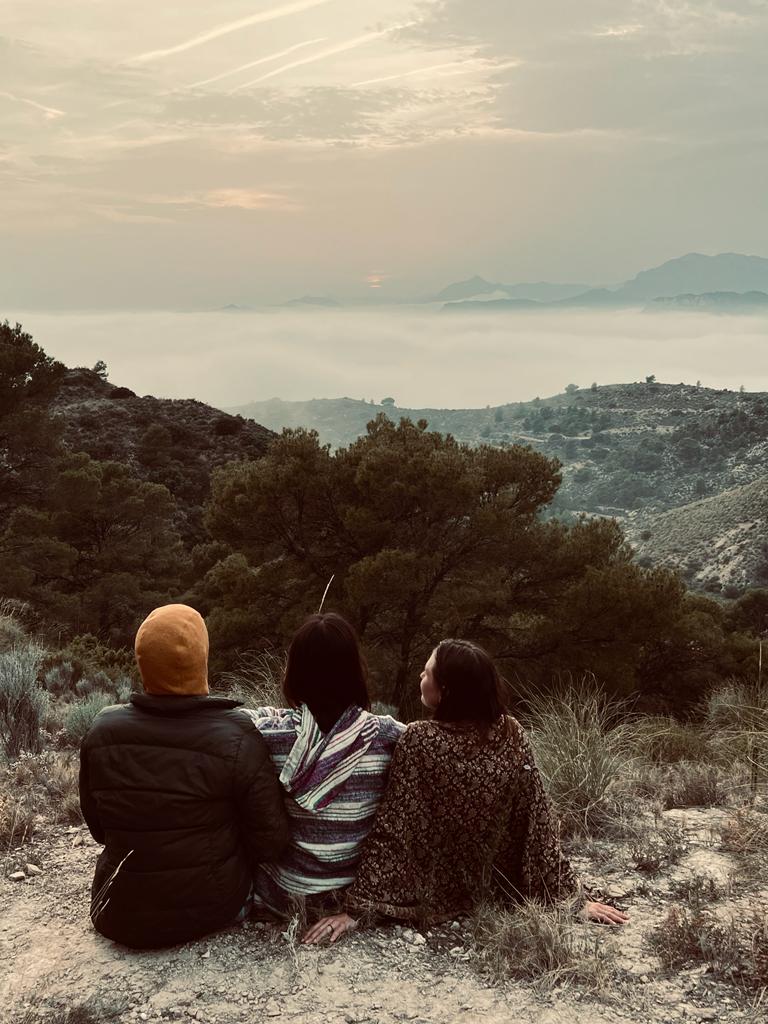
Ceremony at La Mezquita — breathwork in the full attention of witnessing awareness

Union in Practice

If you accept this framework — even provisionally, as a working hypothesis — it changes how you sit down to breathe. Instead of counting ratios and monitoring for sensations, you begin to notice the quality of the witness. Is the awareness that is present for this breath tight or open? Contracted or spacious? Gripping the experience or receiving it?

The Shiva aspect of practice is not something you do. It is something you allow. You cannot make yourself more still by trying harder. You can only stop doing the things that prevent stillness — the reaching, the monitoring, the constant internal commentary, the performance of practice for an imagined audience. When those fall away, something is already there. It was always there. You were just too busy performing to notice it.

The Shakti aspect — the breath itself, the prana, the energy — will move however it needs to when the witness is genuinely present. This is important: you do not need to manage the energy. You do not need to direct the breath toward a particular destination. You do not need to ensure the right things happen. Shakti knows what she is doing. Your job is to be present enough to let her do it.

Pranayama is not the practitioner doing something to the breath. It is the breath, finally allowed to be what it is.

In practical terms, this means beginning any breathwork session with several minutes of simple witnessing. Not observing the breath in order to change it, but simply being present with it. Feeling the chest rise. Feeling the belly release. Letting the exhale be what it is without pushing it longer or shaping it toward an ideal. The witness establishing itself before the technique begins. Shiva awake before Shakti starts to dance.

Then, from that ground of witnessing stillness, the structured practice begins. And it is a different practice from what it was before. Not a procedure. A ritual. A conscious enactment of the universe’s oldest conversation.

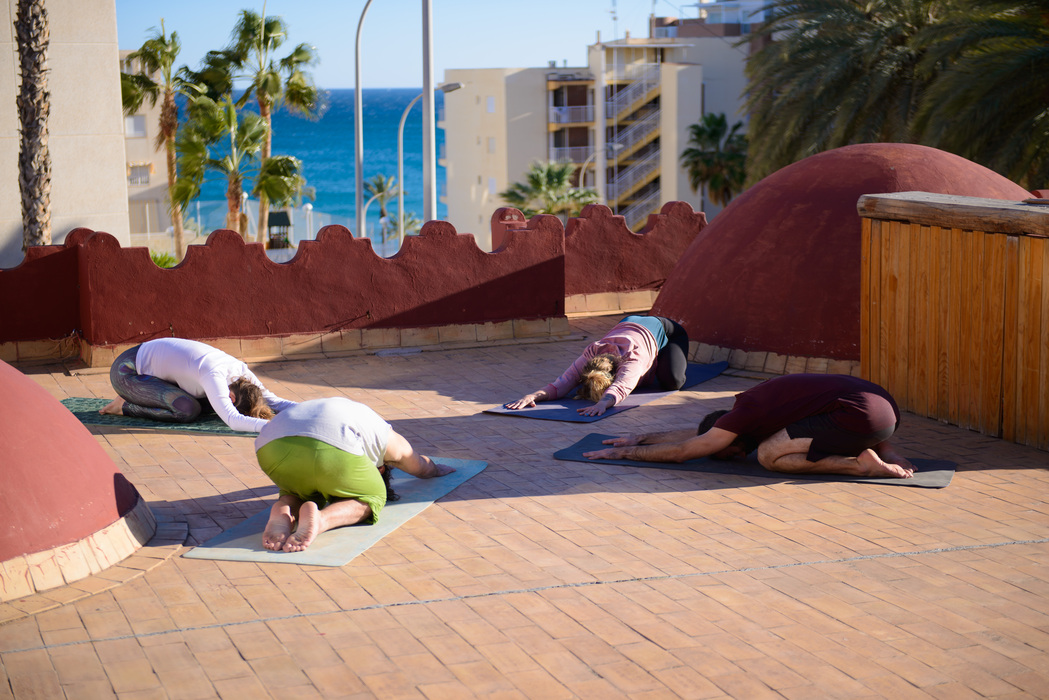
The witness before the technique — stillness before the breath begins its work

Every Breath a Marriage

The inhale is Shakti rising — energy entering form, the universe reaching into the body, life insisting on itself. The exhale is the return: form dissolving back into formlessness, Shakti completing her arc, the body releasing its grip on what it has borrowed. And the pause between — the brief, still space at the end of the exhale before the next inhale begins — is pure Shiva. The witness. The void that is not empty but full. The ground of being before it moves again.

Every breath cycle is a small cosmology. Creation, sustaining, dissolution. Birth, life, death. Shiva and Shakti completing their union twenty thousand times a day in the body of every person alive, whether they know it or not.

The practice of pranayama — of conscious breathing — is simply the decision to attend to what is already happening. To be present for the marriage rather than sleeping through it. To bring the fullness of awareness to the movement that was always sacred, in a body that was always a temple, in a moment that was always enough.

You are not learning to breathe. You are remembering that breathing was already the practice.

Babaji is the founder of La Mezquita. Read more about the team.
Next in this series: Pranayama as Technology — the specific techniques the tradition refined over millennia, what each one does to the nervous system, and how to use them as preparation for ceremony.

Come and breathe with us

Breathwork is woven into every retreat at La Mezquita. If this resonates, the next step is finding the right retreat for you.

← Back to the blog