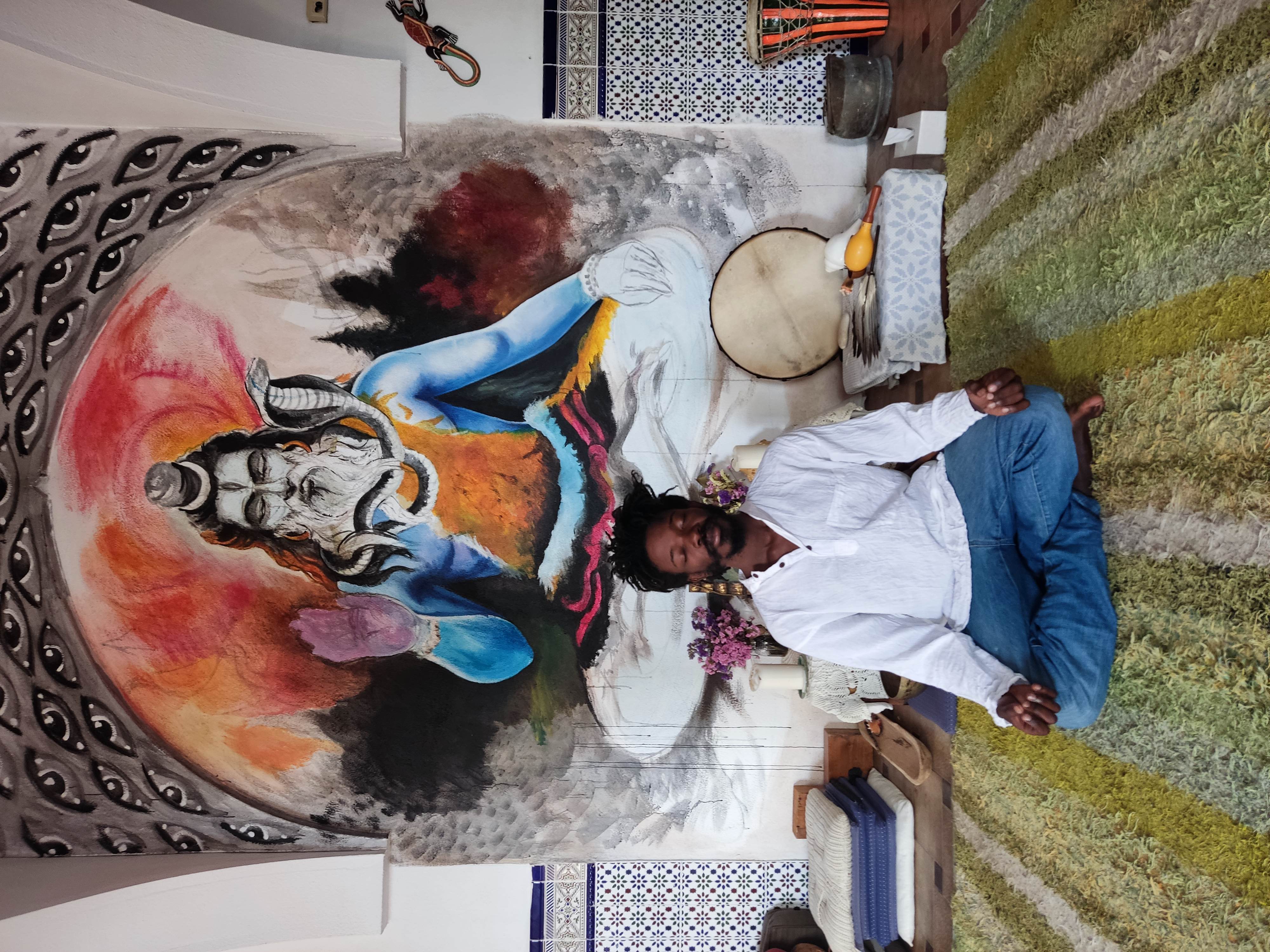
Pranayama practice — the specific techniques and what they do to the nervous system
Breath Is God — Part 5 of 10

Pranayama as Technology: The Specific Techniques and What They Actually Do

Breath Is God — Series This is part five of a ten-part series exploring the relationship between breath, consciousness, and the sacred. Part one established the central thesis: air is the interface between the human and the divine. Part two explored slow breathing and the yogic model of perception. Part three examined what fear does to the breath and why the breath alone can restore the connection to source. Part four mapped the sacred polarity: Shiva as the witnessing stillness, Shakti as the prana, pranayama as their union. This post asks the practical question: what are the specific techniques, and what does each one actually do?

The word pranayama is usually translated as breath control, but that translation misses something. Prana is life force — not just air, but the animating intelligence that rides the air. Ayama means extension, expansion, not merely control. Pranayama is the expansion of life force. The extension of the capacity to receive and conduct the energy that makes you alive.

The tradition developed dozens of specific techniques over three thousand years. They are not interchangeable. Each does something specific to the nervous system, to the blood chemistry, to the quality of awareness that follows. Understanding what each technique actually does — not mystically, but physiologically — is the bridge between ancient teaching and modern application.

Nadi Shodhana: The Balancer

You are not practising alternate nostril breathing. You are tuning the instrument.

Nadi Shodhana — alternate nostril breathing — is the most studied pranayama technique in contemporary neuroscience, and for good reason. It works directly on the ultradian rhythm of nasal airflow described in the previous post, using manual alternation of the nostrils to achieve what the body does naturally only over a cycle of ninety minutes: perfect balance between Ida and Pingala, the lunar and solar channels.

The technique is simple. Inhale through the left nostril while closing the right. Close both, retain briefly. Exhale through the right. Inhale through the right. Close both, retain. Exhale through the left. That is one cycle. Typically practised in rounds of five to ten minutes, though some traditions recommend much longer sessions.

What it produces: the research consistently shows bilateral activation of the prefrontal cortex, reduced activity in the default mode network (the part of the brain responsible for rumination and self-referential thought), increased heart rate variability, and what neuroscientists term interhemispheric synchrony — the two hemispheres of the brain running at unusual coherence. This is the physiological correlate of what the yogic tradition called the opening of Sushumna. The central channel activating as the two lateral channels achieve balance.

For ceremony preparation, Nadi Shodhana is unambiguously primary. It does in twenty minutes what requires ninety minutes of natural oscillation: it brings the nervous system to its most integrated state. It is not relaxation, though relaxation often follows. It is calibration — the fine-tuning of the instrument before the most demanding music it will ever be asked to play.
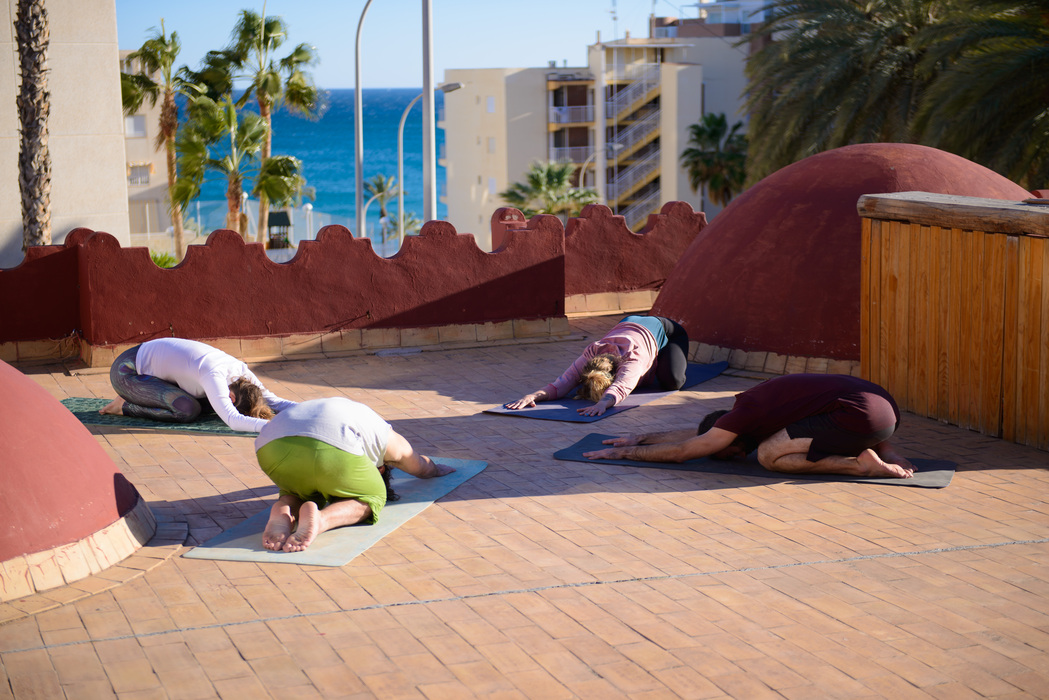

Nadi Shodhana — alternate nostril breathing, the balancer of the two nadis

Kapalabhati: The Cleanser

Kapalabhati means skull-shining breath. The name describes an effect rather than a technique: the eyes brighten, the face clears, the mind becomes sharply, almost uncomfortably, awake. In the Hatha Yoga Pradipika, Kapalabhati is listed not as a pranayama but as a shatkarma — one of the six internal cleansing practices — which gives a clue to what it is actually for.

The technique consists of rapid, rhythmic forced exhalations through the nose, roughly one per second, with passive inhalations. The abdomen pumps actively on each exhale; the inhale is simply the elastic recoil of the diaphragm. Rounds typically last sixty to one hundred and twenty repetitions, followed by a full natural inhale and a sustained breath retention.

Physiologically, what Kapalabhati does is this: the rapid forced exhalations drive CO2 out of the blood faster than normal breathing. Carbon dioxide, contrary to what most people assume, is not merely waste gas. It is a primary regulator of blood vessel dilation. Drop it too quickly and the blood vessels, particularly those feeding the brain, constrict. This is why sustained Kapalabhati practice can produce tingling, lightheadedness, and altered states. The brain is briefly oxygen-restricted despite breathing rapidly — not because of lack of oxygen in the lungs, but because of the vasoconstriction caused by low CO2.

Kapalabhati does not oxygenate the brain. It briefly starves it. The clarity comes in the aftermath.

This is not dangerous in short, supervised rounds. It is, in fact, the physiological mechanism behind many of the dramatic experiences reported in intensive breathwork sessions. The value is real: the forced exhalations also massage the abdominal organs, increase core body temperature, and produce a sharp activation of the sympathetic nervous system that, paradoxically, gives way to deep parasympathetic settling in the rest period after each round. Use it deliberately. Not as the primary technique, but as the activating preparation before the balancing practices that follow.

Kapalabhati — the skull-shining breath, activating and clearing the energy channels

Bhramari: The Soother

Bhramari means the humming bee. The technique is precisely that: a long, sustained humming tone on the exhale, with the ears blocked by the thumbs, the eyes covered by the fingers, the face and jaw completely relaxed. The sound is internal. The vibration is felt throughout the skull, in the sinuses, in the soft tissues behind the face, in the chest.

What it does is remarkable for its simplicity. The humming breath is essentially a very long, controlled exhale. Long exhales activate the vagus nerve and the parasympathetic system. The added element is the vibration: sound resonating through the tissues of the head and chest produces what physiologists call phonophoresis — the mechanical stimulation of tissues by sound waves. The vagus nerve, which passes through the neck and chest, appears to be particularly responsive to vibration in this range.

The practice produces a characteristic stillness that is distinct from the aftermath of Nadi Shodhana. Where the balanced alternate nostril breath produces integration, Bhramari produces a profound interior silence. The sensory withdrawal — ears blocked, eyes covered — removes external stimulation entirely. The humming occupies the attention completely, leaving no room for thought to establish itself. The mind is not suppressed. It is simply occupied with something that has no narrative, no past, no future.

Bhramari does not quiet the mind by force. It gives the mind something so complete that thought stops finding purchase.

For ceremony, Bhramari is most useful in the integration period following the main practice, or as a transition technique between more activating breathwork and the stillness of lying in ceremony. It is the exhale as complete as the inhale — the masculine effort of the inhalation met by the feminine completeness of the humming release.

Bhramari — the humming breath, the soother of the nervous system after activation

Kumbhaka: The Retention

Every pranayama technique contains within it the possibility of kumbhaka: the breath retention, the stillness between the inhale and the exhale, or the emptiness after the exhale is complete. These are called antara kumbhaka (internal retention, after the inhale) and bahya kumbhaka (external retention, after the exhale). They are the most powerful elements of pranayama and, in many traditional lineages, the most closely guarded.

What retention does is compound the effects of whatever came before it. After a long, slow inhale, the lungs are fully expanded, oxygen is maximally absorbed, and the breath retention holds that state while the CO2 builds toward the threshold that will trigger the next exhale. In that space of held breath, something changes. The cessation of movement — which is the primary sensory input of ordinary waking consciousness — produces a sudden, startling stillness in the mind. There is nothing happening. No sensation of the breath moving. Just being, undisturbed.

This is the physiological entry point for what the traditions call kumbhaka as doorway. The breath stopped, the nervous system quiet, the mind with nothing to track — what remains is the witness. Pure awareness. The first taste of what meditation points at, delivered not through conceptual effort but through the simple cessation of the breath’s movement.

In the held breath, the mind runs out of breath to follow. What is left is what was always there.

Retention should be approached gradually and never forced. The temptation is to extend the retention as long as possible — but discomfort in the retention is counterproductive. The point is not duration. The point is the quality of awareness in the stillness. Ten seconds of genuinely open, undistracted presence in the retained breath is worth more than sixty seconds of increasing physical strain and the anxious thoughts that accompany it.

Kumbhaka — the breath retention, the doorway to witnessing awareness

The Sequence That Matters

The individual techniques are less important than the sequence. A preparation session built thoughtfully from these elements produces a compounding effect: each technique conditions the nervous system for what follows. The sequence that we have found most effective — developed through years of working with people in the context of ceremony preparation — moves through three distinct phases.

The first phase is activation and clearing. Kapalabhati rounds, building in intensity, drive out stagnant energy, warm the body, and establish a relationship with deliberate breath movement. This is not comfortable. It is not meant to be. The body is being woken up, not soothed. Three to five rounds, with full natural breath and brief retention between each, is sufficient for most people.

The second phase is balancing. Nadi Shodhana, fifteen to twenty minutes, with brief kumbhaka on both sides. The ratio of inhale to retain to exhale typically moves from 1:1:2 in the first rounds to 1:4:2 in the final rounds, though this should be adjusted for the individual. The long exhale activates the vagus nerve. The retention builds the quality of witnessing awareness. The alternation of nostrils balances the hemispheres. By the end of this phase, the person is in the state of integrated stillness described in the previous post.

The third phase is dissolution. Bhramari, five to ten minutes. The humming exhale deepens the interior silence. The sensory withdrawal internalises the attention completely. By the end of the session, the person is physiologically in the optimal state for ceremony: the nervous system calibrated, the mind still, the prana moving cleanly through both channels, Sushumna accessible.

Ceremony does not begin when the medicine enters the body. It begins when the breath begins.
The sequence that matters — pranayama preparation building toward ceremony readiness

Technology in Service of the Sacred

The word technology frightens some people in this context. It sounds mechanical. It sounds like the opposite of the sacred, the mystical, the open. But technology simply means the systematic application of knowledge to produce a desired result. And the desired result here is the most important thing a human being can prepare for: full presence at the threshold of their own deepest experience.

The techniques do not produce the experience. They prepare the ground. A ceremony without breathwork preparation is like planting seed in hard, unturned soil. The seed is real. The soil is real. But the harvest is smaller than it could have been, because the conditions were not prepared. The medicine, whatever it is — psilocybin, San Pedro, ayahuasca, the medicine of silence — works with what is available. Pranayama makes more available.

Three thousand years of refinement produced these techniques not because the ancients had nothing better to do, but because they were engaged in the most serious inquiry available to human beings: the question of how to open fully to the nature of consciousness itself. The breath was their instrument. The results are preserved in the texts. The map is accurate. All that is required is the willingness to follow it.

The ancients were not being mystical. They were being very, very practical.

Babaji is the founder of La Mezquita. Read more about the team.
Next in this series: The Sacred Numbers — why 5.5 breaths per minute, why 4-7-8, why the ratio of inhale to exhale matters more than the absolute pace — and what the numbers reveal about how the body was designed.

Come and breathe with us

Breathwork is woven into every retreat at La Mezquita. If this resonates, the next step is finding the right retreat for you.

← Back to the blog