Our Philosophy

On spiritual well-being, plant medicine, and why this work matters.

“We are not human beings having a spiritual experience;
we are spiritual beings having a human experience.”

Pierre Teilhard de Chardin

Three pillars

We have long understood that good health rests on two foundations: the physical and the mental. But there is a third dimension that tends to be overlooked, underfunded, and poorly understood by modern medicine: spiritual well-being.

Spiritual well-being is not about religion, although it can include it. It is about a deep and felt sense of connection with something greater than oneself. It is about recognising that we are not only bodies and minds but also beings capable of experience that reaches beyond thought, beyond the ego, and beyond ordinary life. It is about meaning, belonging, awe, love, and the quiet certainty that existence itself is not an accident.

When this dimension of life is neglected, people suffer in ways that neither a prescription nor a therapist can fully reach. There is a loneliness that no social life can fill. An anxiety that no rational reframing can dissolve. A flatness of being that has nothing to do with serotonin levels, and everything to do with the soul having nowhere to breathe.
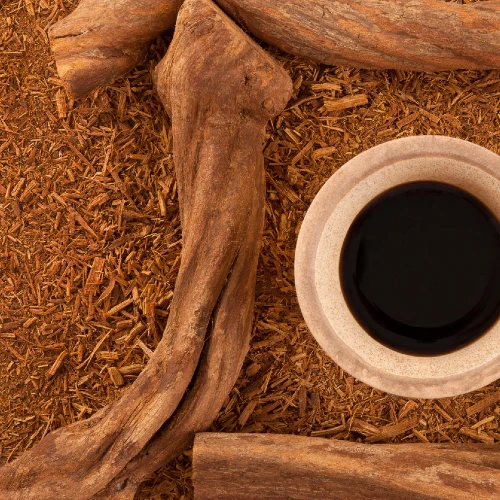
At La Mezquita, spiritual well-being is not an add-on. It is the centre of what we do.


Ancient knowledge, remembered

Throughout human history, cultures across the world have used sacred plants, ritual, music, and altered states of consciousness to access the deeper dimensions of experience. This is not the story of one tradition. It is the story of almost all of them.

Indigenous communities in the Amazon, the Andes, Mesoamerica, and West Africa have carried this knowledge for thousands of years. The Sufi tradition within Islam found God in music, in breath, in the dissolution of the self. Hindu and Buddhist practice built elaborate frameworks for exploring consciousness, ego, and liberation. The Greek mysteries at Eleusis almost certainly involved psychoactive sacraments. Even the earliest Christian communities gathered in shared ritual to experience what lay beyond ordinary life.

The common thread running through all of these traditions is a recognition that the ordinary thinking mind — what we call the ego — is not the whole of who we are. Beneath it, or beyond it, there is something else. Something open, something connected, something that does not die when the body does. Different traditions give it different names. The experience itself, when it is genuine, tends to feel remarkably similar.

Psychedelics have always been one doorway into that experience. They are not the only one, and they are not appropriate for everyone. But for those who approach them with sincerity and care, they can open something that nothing else quite reaches.

What the science is finding

Modern research is beginning to map, in the language of neuroscience, what traditional wisdom has always known.

In 2006, Roland Griffiths and his colleagues at Johns Hopkins University published a landmark study showing that a high dose of psilocybin — the active compound in magic mushrooms — could reliably produce what researchers called a “mystical-type experience.” Participants reported a profound sense of unity, sacredness, and deeply felt positive mood. More than sixty percent of the participants rated it as one of the most personally meaningful experiences of their entire lives. Many described lasting changes in their sense of well-being, their relationships, and their understanding of who they were.

Griffiths, R.R., Richards, W.A., McCann, U., and Jesse, R. (2006). Psilocybin can occasion mystical-type experiences having substantial and sustained personal meaning and spiritual significance. Psychopharmacology, 187(3), 268–283.

A decade later, Robin Carhart-Harris and his team at Imperial College London identified a possible mechanism. Using neuroimaging, they showed that psilocybin significantly reduces activity in the default mode network — the part of the brain most associated with the self-referential, ruminating mind. This is the network that generates the constant internal monologue: the self-judgements, the regrets, the anxieties, the stories we tell ourselves about who we are and how the world works.

When that network quietens, something shifts. The boundaries of the self become more permeable. People report feeling connected to other people, to nature, to the universe itself. They describe a sense of being held in something larger than their ordinary life, of seeing their personal history from outside the frame of their usual identity. Some experience what can only be called love — not romantic love, not sentimental love, but a vast and impersonal tenderness that seems to be the ground state of things.

Carhart-Harris, R.L., Muthukumaraswamy, S., Roseman, L., et al. (2016). Neural correlates of the LSD experience revealed by multimodal neuroimaging. Proceedings of the National Academy of Sciences, 113(17), 4853–4858. See also: Carhart-Harris, R.L. and Friston, K.J. (2010). The default-mode, ego-functions and free-energy: a neurobiological account of Freudian ideas. Brain, 133(4), 1265–1283.

These are not side effects. They are the mechanism. This is why psychedelics can help people heal from depression, addiction, grief, and the sense of being trapped in a version of themselves they never chose.


Music and breath

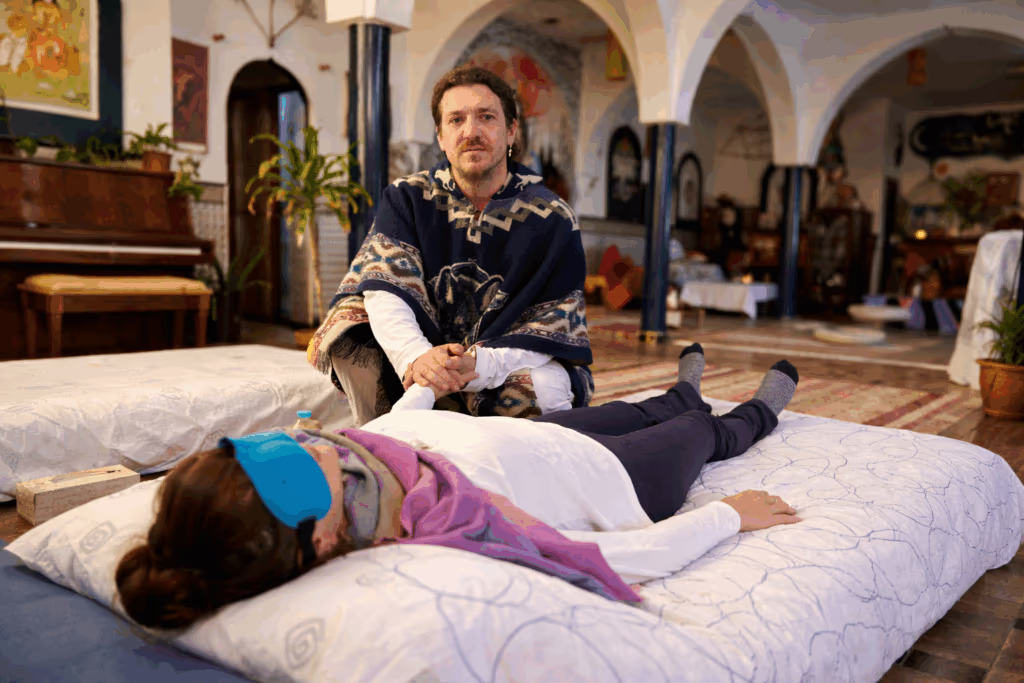
At La Mezquita, the ceremony does not begin with the medicine. It begins with music.

We believe music is medicine in its own right. Long before psychopharmacology, long before neuroscience, human beings have used rhythm, melody, and song to move between states of consciousness, to open emotion, to grieve, to celebrate, to pray. Music reaches the parts of the mind that language cannot. It speaks directly to the body, to memory, to the part of you that existed before you had words for any of it.

In a psychedelic ceremony, music can do extraordinary things. It can hold a person who is frightened. It can open a person who is closed. It can guide attention toward what needs to be felt. It can carry a person through the heaviest moments and bring them gently back.

Breath is the other foundation. In every breath there is the possibility of compassion, forgiveness, and love. Sometimes a person is only one breath away from remembering something they have always known. We work with breath intentionally — before the ceremony, during it, and after. It is the simplest thing, and one of the most powerful.


The healing path

The psychedelic experience opens a door. What is on the other side of that door tends to be deeply personal, sometimes surprising, and often exactly what is needed.

People encounter grief they never had space to feel. They revisit events from their past with a different quality of attention. They experience themselves outside the narratives they have lived inside for years. They see their lives from a distance that is, paradoxically, also a closeness: a closeness to what they actually are, beneath all the layers of conditioning, performance, and self-protection.

What nearly all of them share, when the experience is well-held and well-integrated, is a movement toward self-acceptance, self-love, and self-compassion. These are not soft words. They are the foundations of genuine change. Without them, people return to the same patterns, the same fears, the same ways of treating themselves that created the suffering in the first place. With them, the healing continues long after the ceremony ends.

The soul’s healing journey does not finish when you leave La Mezquita. It continues in ordinary life: in the habits that begin to shift, in the things that no longer feel as urgent, in the relationships that quietly deepen, in the moments of unexpected peace. The ceremony plants a seed. Integration is the soil.


How we hold it

We are interested in consciousness, not spectacle. We are interested in safety, not surrender of responsibility. We are interested in depth, not intensity for its own sake. And we are interested in what happens after: how people bring what they found back into their lives and make something real with it.

This is why La Mezquita works the way it does. The screening process exists because this work is not for everyone, and because honesty at the beginning makes the work safer and more meaningful for everyone. The preparation exists because what you bring into the experience shapes what you receive from it. The integration support exists because the ceremony is only the beginning.

We also hold this work with a certain humility. We do not claim to have all the answers. We do not promise outcomes. What we offer is a space that is genuinely safe, genuinely cared for, and genuinely oriented toward your well-being — not as a transaction, but as a commitment.

The soul knows what it needs. Our role is to create the conditions for it to find out.

Ready to take the next step?

If something here resonates, the next step is a conversation about which retreat might be right for you.